Homeowners ask us this constantly:
“Will my koi die in an Aquascape-style pond?”
The honest answer?
Yes — they can — when the pond isn’t designed with koi biology in mind.
When a pond is built mainly for appearance — shallow shelves, undersized filters, poor circulation — the fish live in constant stress. Stress opens the door to parasites, infections, and “mystery” losses.
But here’s the other side:
When depth, oxygen, filtration, and fish load are engineered correctly, koi thrive — and live for decades.
This guide breaks down what really goes wrong, the most common diseases we see, and what it actually takes to build a pond that supports life instead of fighting it.
Why koi struggle in many “decorative” ponds
A koi pond isn’t just stones, plants, and water. It’s a living system that has to manage waste, temperature, oxygen, and bacteria.
Trouble usually starts with:
-
shallow water that heats and cools too fast
-
insufficient bio-filtration
-
too many fish in too little water
-
adding koi before the pond cycles
-
heavy feeding without testing
-
dumping in chemicals as shortcuts
Once fish are stressed, parasites and bacteria take advantage. By the time you “see” the problem, it’s already been building quietly.
Let the pond cycle before introducing valuable koi
This is one of the biggest reasons people lose fish early.
Your bio-filter needs time to grow beneficial bacteria. Those bacteria convert toxic ammonia into safer compounds. If koi go in too early, toxins climb — and gills burn.
Simple rule of thumb:
-
Run pumps and filtration nonstop.
-
Test ammonia, nitrite, nitrate, and pH.
-
Wait until readings stabilize.
-
Add fish gradually — not in one big batch.
Patience here prevents heartbreak later.
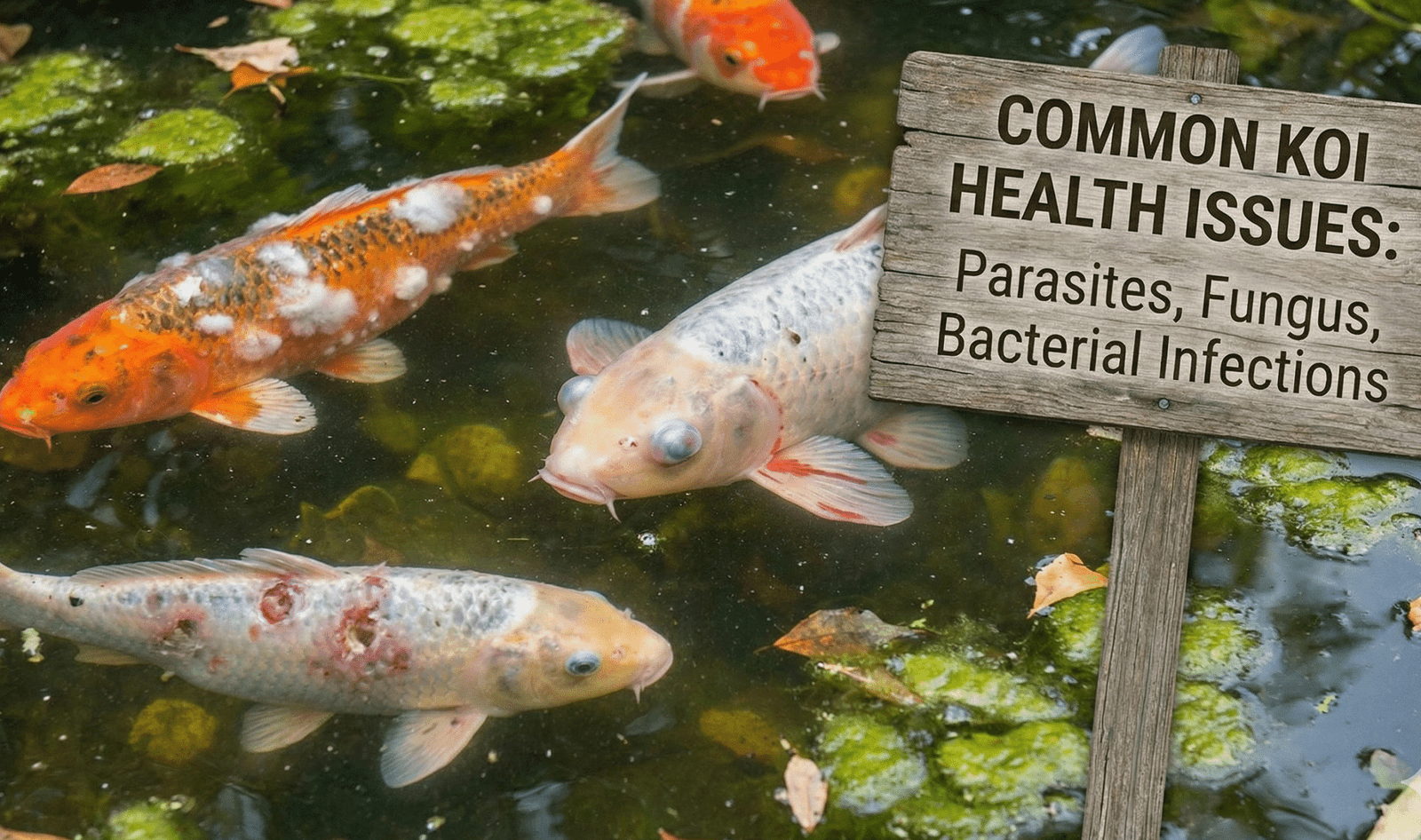
Common koi diseases we see when ponds are stressed
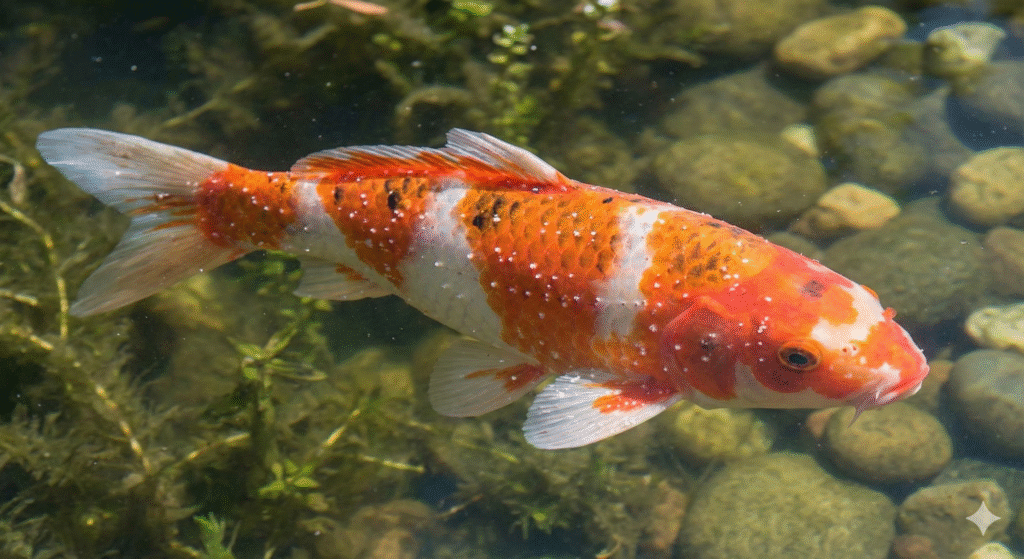
Ich (White Spot)
Signs: small white specks, flashing, sluggish behavior.
Cause: stress and fast temperature swings.
Plan: stabilize water, increase aeration, use pond-safe treatment carefully.
Fin Rot
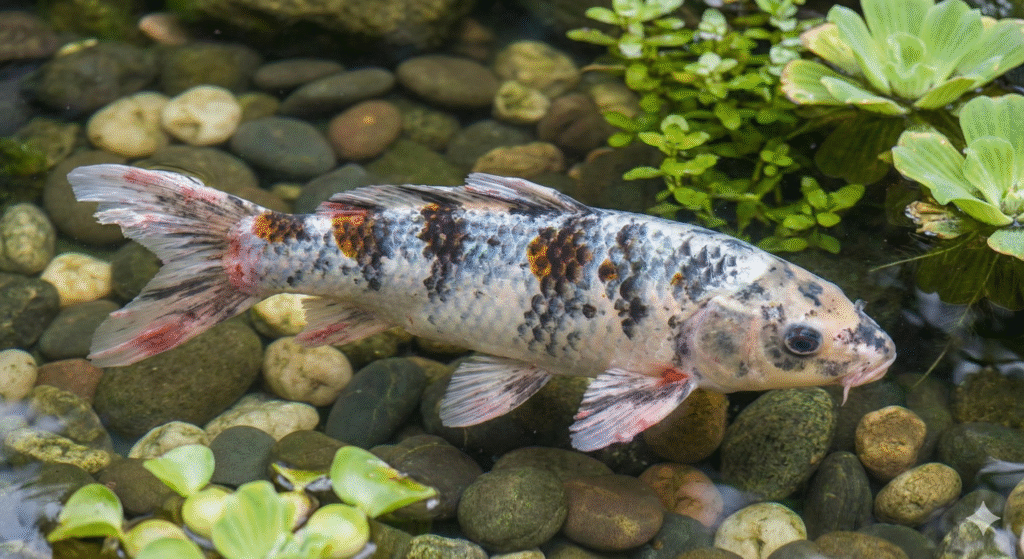
Signs: frayed, dissolving fins.
Cause: dirty water, injuries, weak immune systems.
Reality: water quality fixes the problem — medication only supports.
Ulcers (Bacterial)
Signs: sores, raised scales, red patches.
Cause: chronic stress and poor pond hygiene.
Action: stabilize the environment; severe cases need expert help.
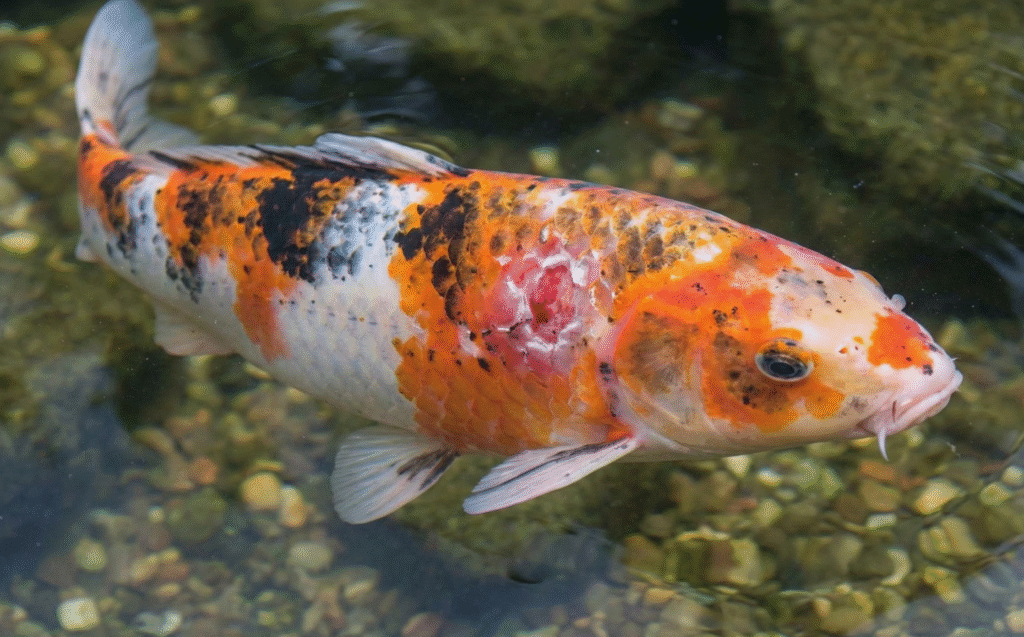
Flukes
Signs: rapid breathing, clamped fins, scratching.
Source: new fish, plants, or wildlife.
Approach: verify when possible; treat with proven parasite meds — avoid guessing.
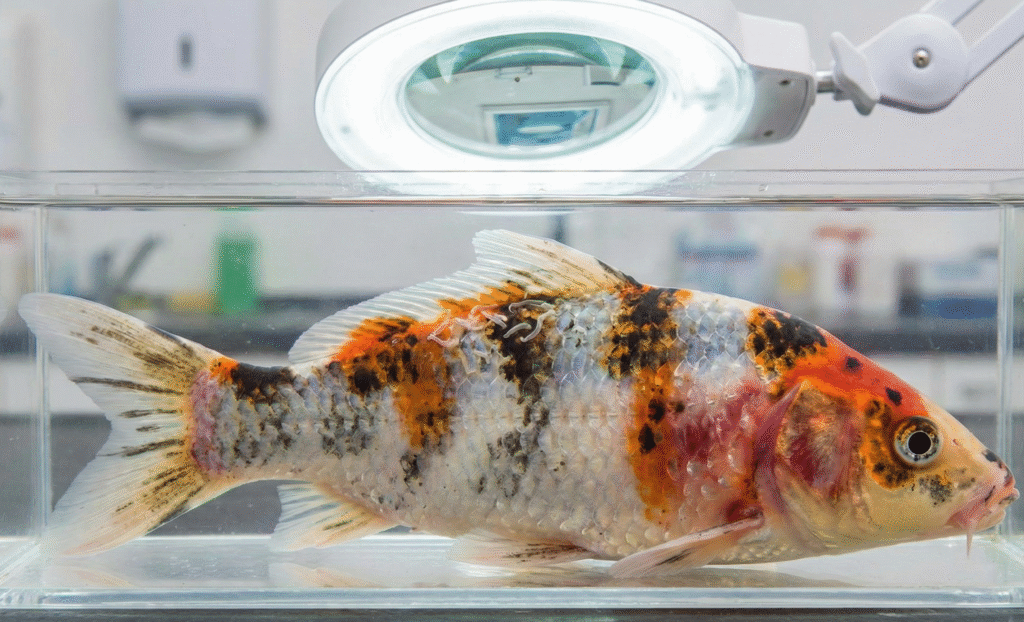
Costia
Signs: gray slime coat, isolation, lethargy.
Trigger: weakened fish in unstable ponds.
Response: targeted treatment plus strong oxygen support.
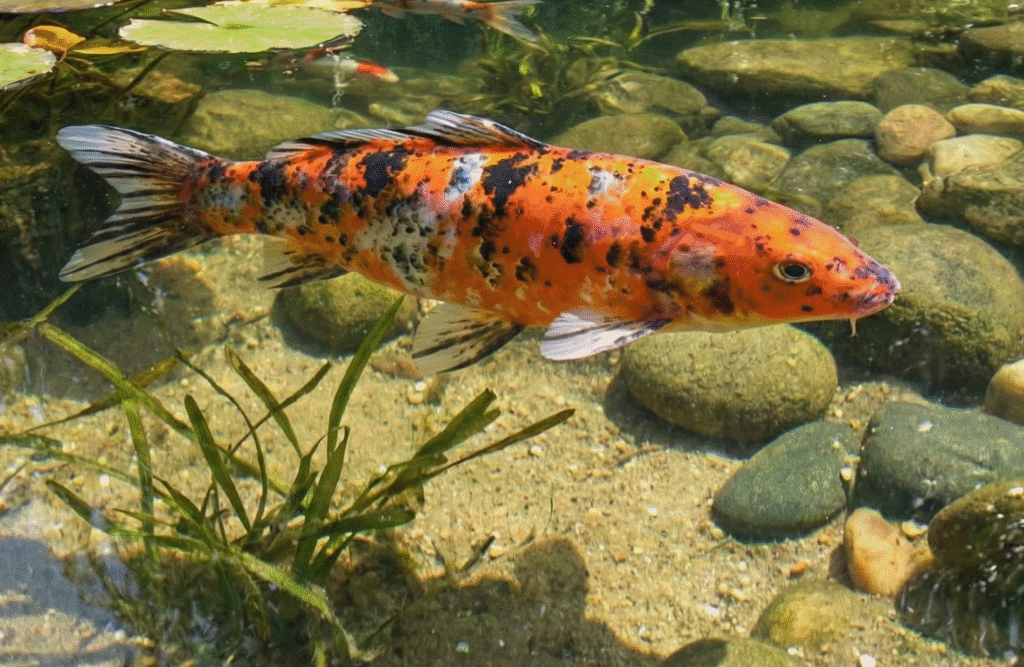
Anchor Worm / Fish Lice
Signs: visible parasites attached to skin.
Note: don’t pull them off — treat the system correctly.
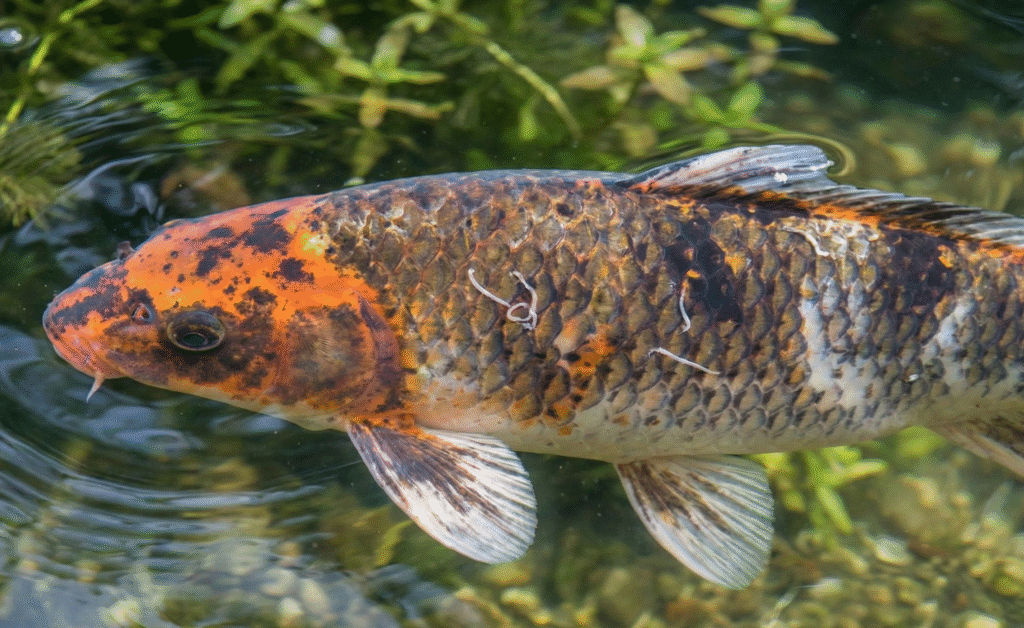
Medication is not the first step
A lot of ponds take a turn for the worse after multiple products get dumped in at once.
Start with foundations:
-
test the water
-
boost aeration
-
pause feeding for a couple of days
-
rinse filters using pond water (not chlorinated tap)
-
remove rotting debris
Once things stabilize, then medicate — carefully — only when it’s necessary.
Quarantine new koi — every single time
Even reputable suppliers can introduce problems.
A simple, separate tank with filtration and aeration for 2–4 weeks prevents most outbreaks. It’s inexpensive insurance.
FAQs — straight answers
Will koi die in Aquascape-style ponds?
Yes — if they’re shallow, overloaded, rushed, or poorly filtered. Built correctly, koi thrive.
Why do fish “suddenly” die?
Most sudden losses are oxygen crashes, ammonia spikes, or contamination — not random disease.
Is clear water always safe?
No. Clear water can still be chemically dangerous. Testing matters.
Can I treat everything at once?
Please don’t. Diagnose first — treat second.
What homeowners deserve to know
-
Design matters more than decorations.
-
Stable water is the real “medicine.”
-
Cycling takes time — shortcuts cost fish.
-
Overfeeding creates constant stress.
-
Chemicals are tools, not solutions.
If something feels off, act early. Waiting rarely helps.
Professional koi health checks — Aquascape Creations
If you’re unsure what’s happening, we can take a close look and create a plan.
Typical visit includes:
-
full water testing
-
filtration and circulation review
-
koi health observation
-
treatment recommendations
-
prevention strategy moving forward
We serve Livermore and surrounding Bay Area communities.
Final word
Aquascape-style ponds can be beautiful — and perfectly safe for koi — when biology leads the design.
Built wrong, they slowly create stress until disease shows up.
Another quiet killer we see far too often is predators. Herons, raccoons, and other wildlife can wipe out a pond overnight. That’s a whole topic on its own — if you’d like to learn how to protect your koi, wait for our next blog.